Ledger Login: A Complete Overview of Secure Crypto Access
As cryptocurrency becomes a core part of the global financial ecosystem, secure access to digital assets has never been more important. Unlike traditional banking, crypto users operate in a self-sovereign environment, where ownership and responsibility go hand in hand. In this landscape, Ledger Login has emerged as one of the most reliable and secure methods for managing and protecting cryptocurrency holdings.
Ledger Login is not a conventional login system. It does not rely on email addresses, passwords, or centralized authentication servers. Instead, it uses cryptographic verification and physical hardware to ensure that only the rightful owner can access and authorize transactions. This article explores Ledger Login in depth, covering its design, functionality, advantages, challenges, and role in the future of digital finance.
What Is Ledger Login?
Ledger Login is the secure authentication process that allows users to access their cryptocurrency wallets using a Ledger hardware device in conjunction with the Ledger Live application. Rather than logging into an online account, users authenticate access by unlocking a physical Ledger device and approving actions directly on it.
This approach ensures that private keys remain offline and protected from online threats. Ledger Login is fundamentally different from web-based wallet logins because access is tied to physical possession of the hardware wallet.
The Core Idea Behind Ledger Login
The philosophy behind Ledger Login is based on one key principle: true ownership requires direct control. In traditional financial systems, banks and institutions manage access on behalf of users. In contrast, Ledger Login empowers individuals to control their assets without intermediaries.
This philosophy is built on:
Decentralization
Self-custody
Hardware-based security
User responsibility
Ledger Login reflects the original ethos of cryptocurrency—financial independence combined with strong security.
How Ledger Login Eliminates Centralized Risk
Centralized platforms store sensitive user data on servers, making them attractive targets for cybercriminals. Even well-protected platforms have experienced data breaches.
Ledger Login removes this risk by:
Eliminating centralized credential storage
Avoiding cloud-based authentication
Keeping private keys isolated in hardware
Since Ledger does not store login credentials or private keys, there is no central database for attackers to exploit.
Ledger Hardware Wallets and Login Security
Ledger Login depends entirely on Ledger hardware wallets, which are designed specifically for cryptographic protection.
Secure Element Chip
Each Ledger device contains a secure element chip certified to resist advanced attacks. This chip safeguards private keys and ensures they cannot be extracted.
Physical Confirmation Layer
Transactions and account access require manual confirmation on the device, preventing unauthorized remote actions.
Offline Key Isolation
Private keys never leave the device or appear on internet-connected systems, even during login.
This combination makes Ledger Login highly resistant to hacking.
Step-by-Step Explanation of Ledger Login
Ledger Login follows a straightforward yet highly secure workflow.
1. Ledger Live Setup
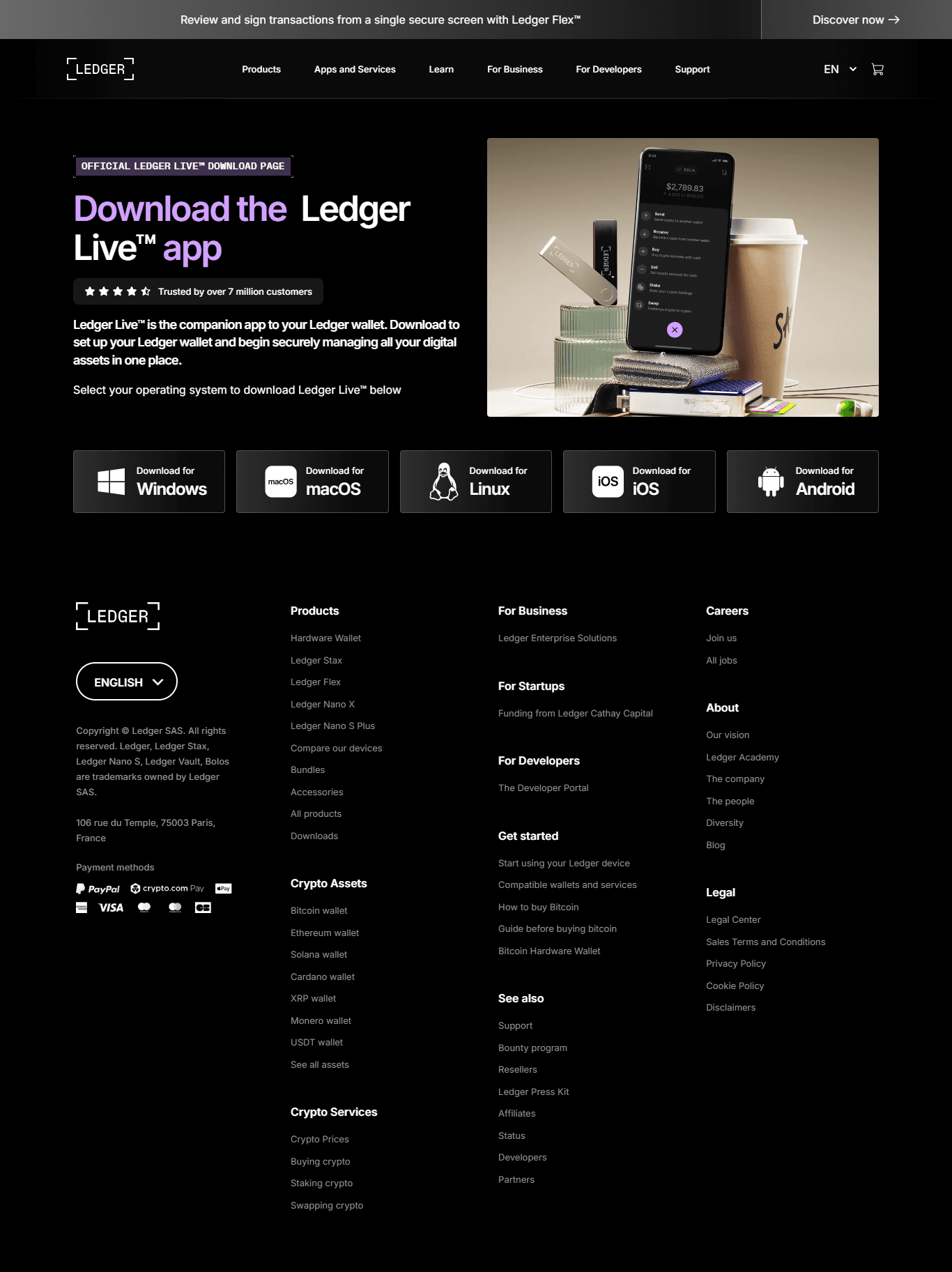
Ledger Live is the official interface that allows users to interact with blockchain networks. It can be installed on desktop or mobile devices.
2. Device Connection
The Ledger wallet is connected to the device using a USB cable or Bluetooth, depending on the model.
3. PIN Authentication
Users unlock their Ledger device by entering a PIN directly on the hardware wallet. This PIN is never typed on a keyboard or screen.
4. Blockchain App Selection
Each cryptocurrency requires its own application installed on the Ledger device. Opening the app signals readiness for secure access.
5. Secure Access
Once verified, Ledger Live displays account balances and enables transaction management, while final approval remains on the hardware device.
This process defines the Ledger Login experience.
Why Ledger Login Does Not Use Passwords
Passwords are one of the weakest points in digital security. They can be guessed, reused, phished, or leaked.
Ledger Login avoids these vulnerabilities by:
Replacing passwords with hardware authentication
Eliminating password recovery attacks
Removing dependence on memory-based security
Instead of something you know, Ledger Login relies on something you own.
Ledger Login on Desktop Platforms
Desktop usage is popular among users managing complex portfolios or performing frequent transactions.
Benefits of Desktop Ledger Login
Larger display for transaction verification
Stable USB connectivity
Full feature access within Ledger Live
Ledger Live supports major operating systems, ensuring wide compatibility.
Ledger Login on Mobile Devices
Mobile Ledger Login provides flexibility without compromising security.
Mobile Login Features
Bluetooth connectivity for supported devices
Secure on-the-go access
Same hardware confirmation process
Even on mobile, private keys remain fully protected within the Ledger device.
Ledger Login and Asset Compatibility
Ledger Login supports a broad ecosystem of digital assets.
Supported Categories
Major cryptocurrencies
Altcoins and tokens
Stablecoins
NFTs
DeFi and Web3 assets
Each asset interaction requires explicit confirmation, reinforcing security across all networks.
Ledger Login in Web3 Applications
Web3 platforms often require wallet connections for decentralized applications.
How Ledger Login Enhances Web3 Security
Transactions must be approved on the device
Smart contract interactions are visible before approval
Unauthorized actions are blocked automatically
This ensures users remain in full control when interacting with decentralized services.
Ledger Login and NFT Security
NFT transactions are often targeted by malicious actors due to their high value.
Ledger Login protects NFT users by:
Displaying transaction data on the device screen
Requiring manual approval
Preventing background or hidden transfers
This added transparency significantly reduces the risk of NFT theft.
Common Ledger Login Issues and How to Fix Them
While Ledger Login is robust, users may occasionally encounter issues.
Device Connection Problems
Try a different USB cable or port
Restart Ledger Live
Update firmware
Incorrect PIN Attempts
Multiple incorrect entries reset the device
Restore access using the recovery phrase
Application Errors
Reinstall the affected crypto app
Clear Ledger Live cache
Ensure software is up to date
Most issues can be resolved without affecting asset security.
The Role of the Recovery Phrase in Ledger Login
The recovery phrase is the ultimate backup for Ledger Login.
What the Recovery Phrase Does
Restores wallet access on a new device
Recreates all private keys and accounts
Security Best Practices
Store it offline
Never share it
Never enter it into websites or apps
Anyone with the recovery phrase has full control over the wallet.
Ledger Login and Scam Awareness
Many scams exploit misunderstandings about Ledger Login.
Common Scam Indicators
Fake login websites
Emails requesting recovery phrases
Messages claiming account suspension
Important Facts
Ledger does not offer web-based logins
Ledger never asks for recovery phrases
Ledger Login always requires physical confirmation
Understanding how Ledger Login works helps users avoid scams.
Privacy and Ledger Login
Ledger Login minimizes personal data exposure.
Privacy Advantages
No personal information required to log in
No centralized tracking of user accounts
No email-based authentication
While Ledger enhances privacy, blockchain transparency still applies to transactions.
Ledger Login for Long-Term Asset Storage
Ledger Login is widely used for long-term crypto storage.
Why Long-Term Holders Prefer Ledger
Reduced exposure to online threats
Minimal need for frequent access
High level of protection for large balances
This makes Ledger Login ideal for cold storage strategies.
Ledger Login in Professional and Institutional Use
Ledger also provides solutions for businesses and institutions.
Professional Applications
Digital asset treasury management
Multi-approval workflows
Compliance and auditing systems
Even in professional environments, Ledger Login remains hardware-based.
Advantages of Ledger Login Over Other Wallet Systems
Ledger Login offers several standout advantages:
Offline private key storage
Hardware-based authentication
No passwords or usernames
Resistance to phishing and malware
Broad ecosystem support
These features make it one of the most trusted login systems in crypto.
Best Practices for Safe Ledger Login
To maximize security:
Keep device firmware updated
Choose a strong PIN
Verify transaction details on the device
Avoid unofficial software
Secure the recovery phrase
User behavior plays a crucial role in maintaining security.
The Future of Ledger Login
Ledger continues to improve its ecosystem through:
Enhanced mobile functionality
Expanded Web3 integrations
Improved user experience
Ongoing security research
Despite innovation, the core principle of physical, offline authentication remains central to Ledger Login.
Frequently Asked Questions About Ledger Login
Can Ledger Login be accessed without the device?
No. Physical access to the Ledger device is always required.
What happens if my computer is compromised?
Your assets remain safe because private keys never leave the device.
Is Ledger Login free to use?
Yes. There are no login or access fees.
Conclusion: Why Ledger Login Is a Trusted Security Standard
Ledger Login represents a powerful shift away from vulnerable online authentication methods. By combining hardware security, offline key storage, and physical confirmation, it provides a level of protection that few alternatives can match.
For anyone serious about cryptocurrency—whether holding assets long term, exploring Web3, or managing professional portfolios—Ledger Login offers confidence, control, and peace of mind. In an increasingly digital financial world, Ledger Login stands as a trusted gateway to secure crypto ownership.